THE FEED
WEEKLY BLOG
Prefabricated Identification
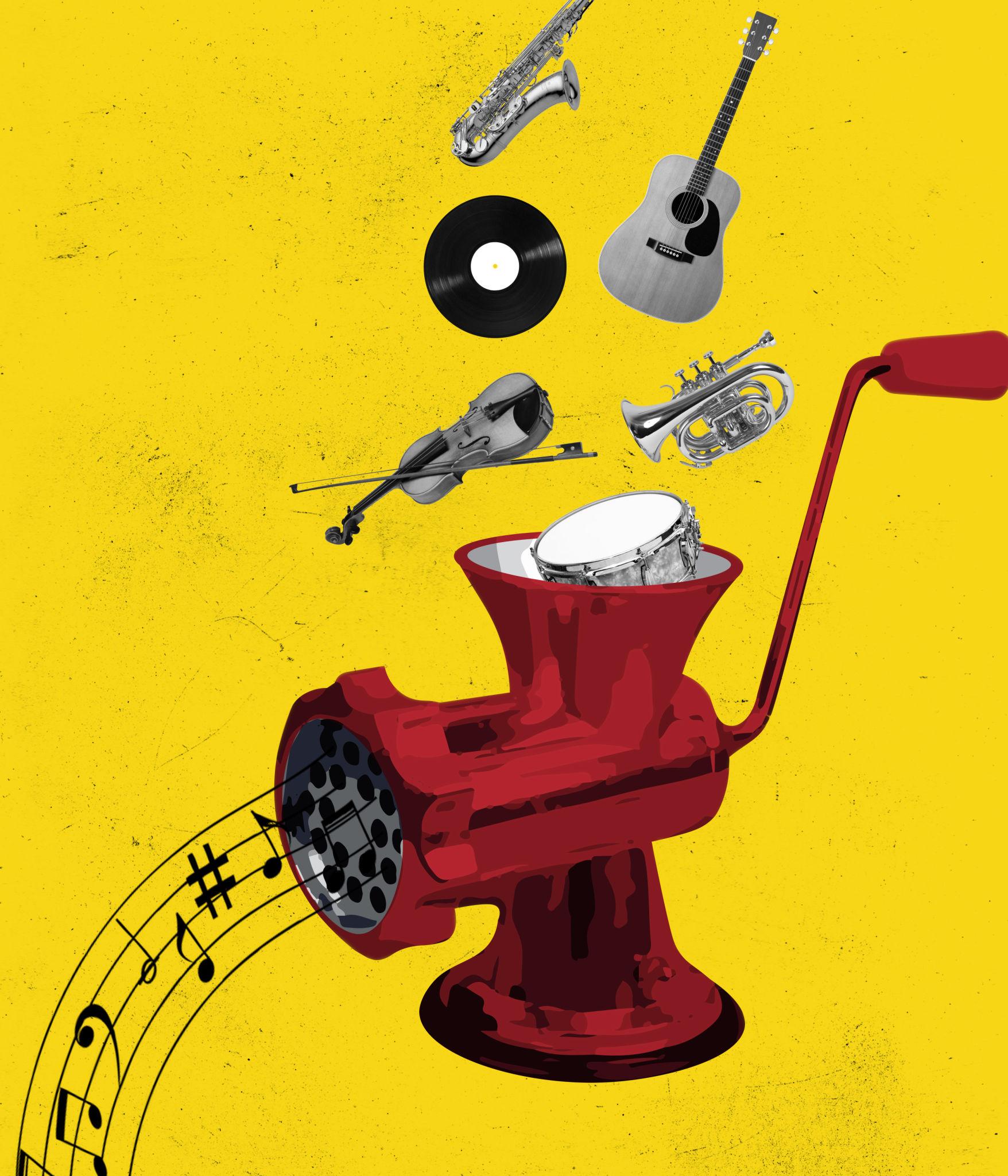
There’s a weird expectation in music now that an artist should arrive fully assembled. Not just talented, not just driven, but market-ready in every sense of the word. Before the songs even have time to breathe, there’s already pressure to have a visual identity, a rollout plan, a clean narrative, a short-form content strategy, and enough data to prove you’re worth anybody’s attention. Somewhere along the way, development got replaced by presentation. The industry started asking people to look complete before they’ve even been given the room to become anything real. That pressure changes the work. You can hear it in music that sounds overly self-aware, like it was made while staring over its own shoulder. Artists are pushed to think like marketers before they’ve had the chance to think like artists, and the result is a lot of music that feels prematurely packaged. Not bad, necessarily. Just over-handled. Sanded down too early. Built with an audience in mind before a point of view has even settled in. The song becomes the proof of concept instead of the actual center of the whole thing. A lot of industry people will frame this as professionalism, but half the time it’s really just risk management dressed up as wisdom. It’s easier to invest in somebody who already looks like a product. Easier to back someone with clean branding, predictable output, and a personality that fits neatly into a caption. The problem is that some of the best artists never looked “ready” in the beginning. They looked uneven. Strange. Raw. Sometimes even awkward. But awkwardness is often where identity lives before the world learns how to name it. If you filter too hard for polish, you miss the people who are actually trying to say something new. What gets lost in all of this is the idea that artists are supposed to evolve in public. They’re supposed to have eras that don’t fully connect yet. They’re supposed to make records that overreach, visuals that feel half-formed, statements that sharpen over time. That’s not failure. That’s growth. But growth doesn’t photograph well in an ecosystem obsessed with instant coherence. So instead, a lot of artists end up imitating the final stage of someone else’s career, because that feels safer than showing the unfinished parts of their own. The industry says it wants authenticity, but it often only rewards it after it’s been cleaned up, framed correctly, and made easy to sell. That’s why so much of the most interesting music still comes from the edges, from people building in spite of the system instead of through it. They’re not waiting to look official. They’re not asking permission to be fully formed. They’re making the mess first, letting the sound teach them who they are, and trusting that the right people will hear it before the machine does. That’s still where the real stuff lives.